Header
Spacer Spacer Spacer Spacer Spacer
Change Image
Home
About Us
Holding Area
Dairy Barns
Spacer
Hog Barns
Spacer
Poultry Barns
Spacer
Fail Safe Systems
Spacer
Spacer
Installation Instrustions
Spacer
Spacer Questions and Answers about PolyVent
  • What is PolyVent II?
  • What is a PolyVent III?
  • How does it work?
  • How long can a JanAire PolyVent be?
  • What is the right length for my application?
  • How big are the fans?
  • Can PolyVents be patched?
  • Is there a warranty?
  • How long do PolyVents last?
  • Installation time?
  • Time needed to replace poly?
  • Will JanAire PolyVents stand up to strong winds?
  • What happens in a power outage?
  • Mice?
  • What is PolyVent II?
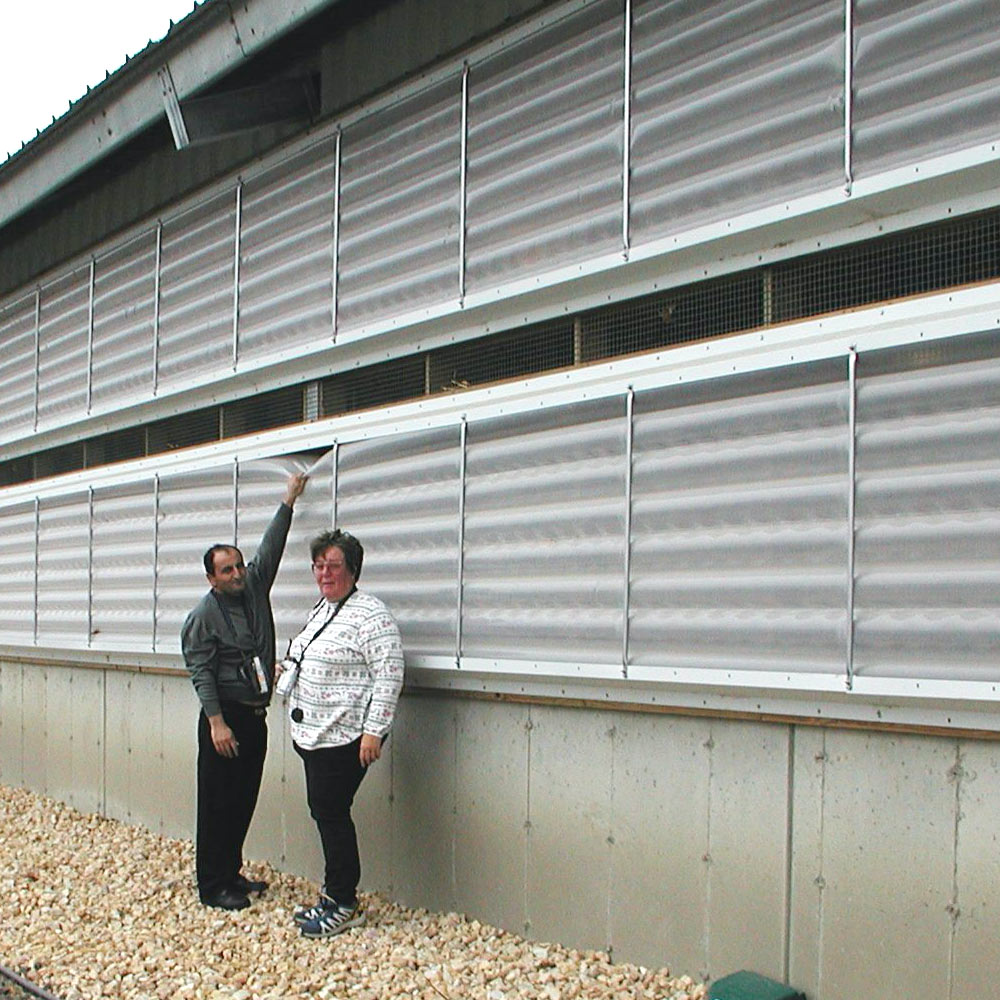
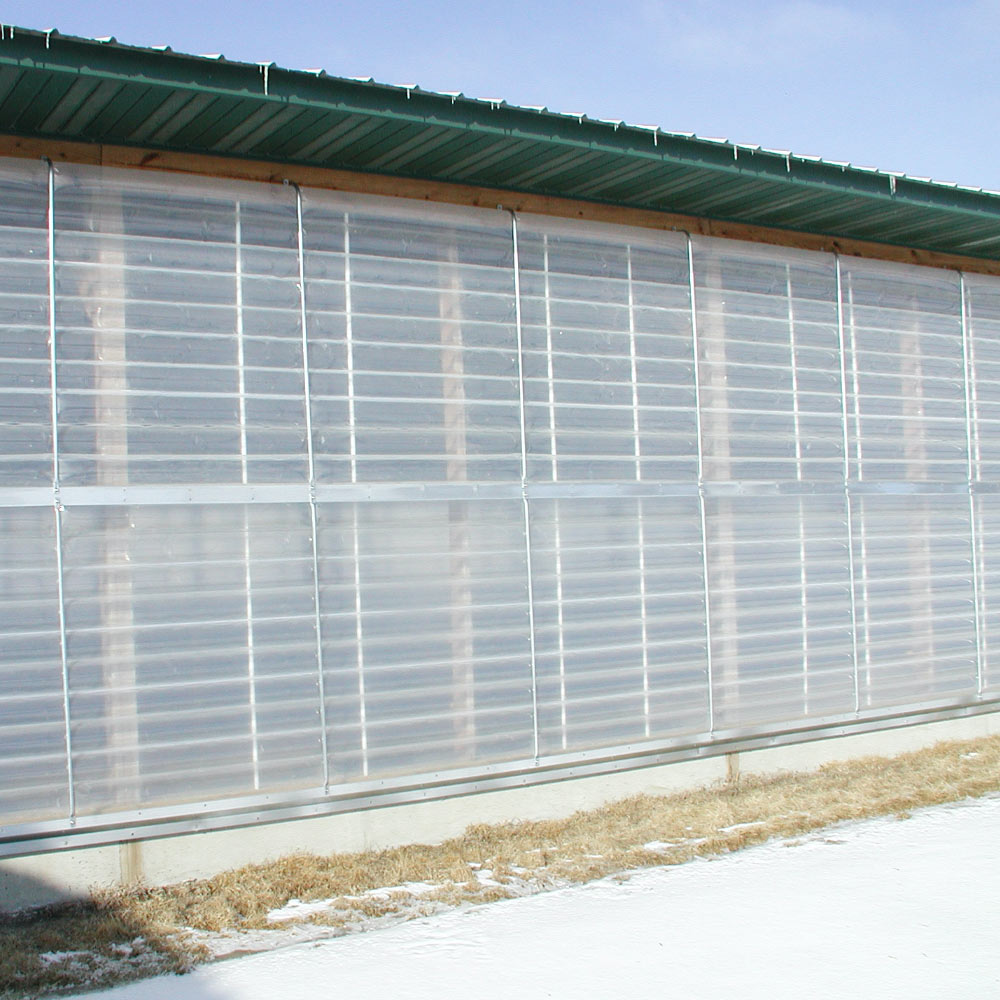
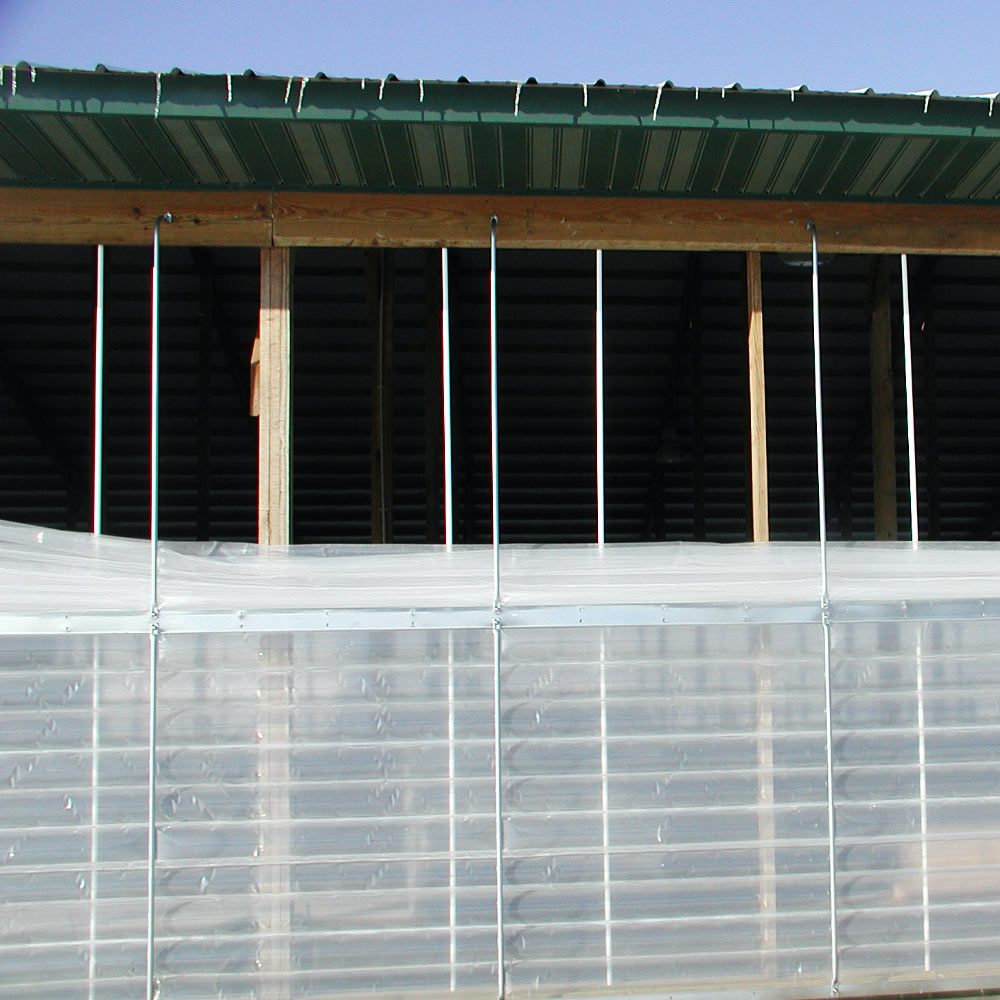
    PolyVent II resembles an inflatable air mattress propped up on its side encased in an attractive white metal frame. A small 1/40th HP squirrel cage blower is connected by a flexible hose to the top tube of the "mattress". As the blower fills the tubes with air, the "mattress" starts to rise, eventually filling the opening in the building behind the PolyVent II. PolyVent II is normally used on the bottom half of a stacked JanAire unit, it is usually operated with an on/off switch.

    What is a PolyVent III?
    PolyVent III is PolyVent II with a special seal in either the 2nd or 3rd tube from the bottom of the poly. PolyVent III operates with two 1/40th HP squirrel cage blowers. One blower is connected to the top tube of the poly, the 2nd blower is connected to the tube just below the solid seal on the poly, both blowers are connected with flex hoses.

    How does it work?
    Thermostats control the blowers which inflate the PolyVent. When the temp inside a building gets above the desired temperature for the building, the bottom blower will shut off, causing the bottom tubes in the JanAire PolyVent to slowly deflate and collapse into the bottom gutter, out of the way. This action creates a small top opening that allows for fresh, outside air to enter the building. When more ventilation is called for, the top blowers will automatically shut off. The remaining tubes will partially, or fully collapse until the desired temperature is reached. PolyVent is a very active system when weather takes wild swings during the spring and fall. A 5 foot X 100 foot JanAire PolyVent takes less than 2 minutes to go from open to closed!

    How long can a JanAire PolyVent be?
    JanAire PolyVents can be as short as 8 feet, or up to 300 feet in length and all lengths in between.

    What is the right length for my application?
    That will depend on the type of animals you have and your location. Southern barns can use longer lengths than northern barns. Dairy barns typically use longer lengths than hog barns. Hog barns using 40CFM of minimum ventilation can use longer lengths than barns equipped with a 20CFM of minimum ventilation. We will help you find the right length for your application. Call us at 800-246-5387 for help.

    How big are the fans?
    The1/40th HP take 60 watts of power, just like a 60 watt light bulb.

    Can PolyVents be patched?
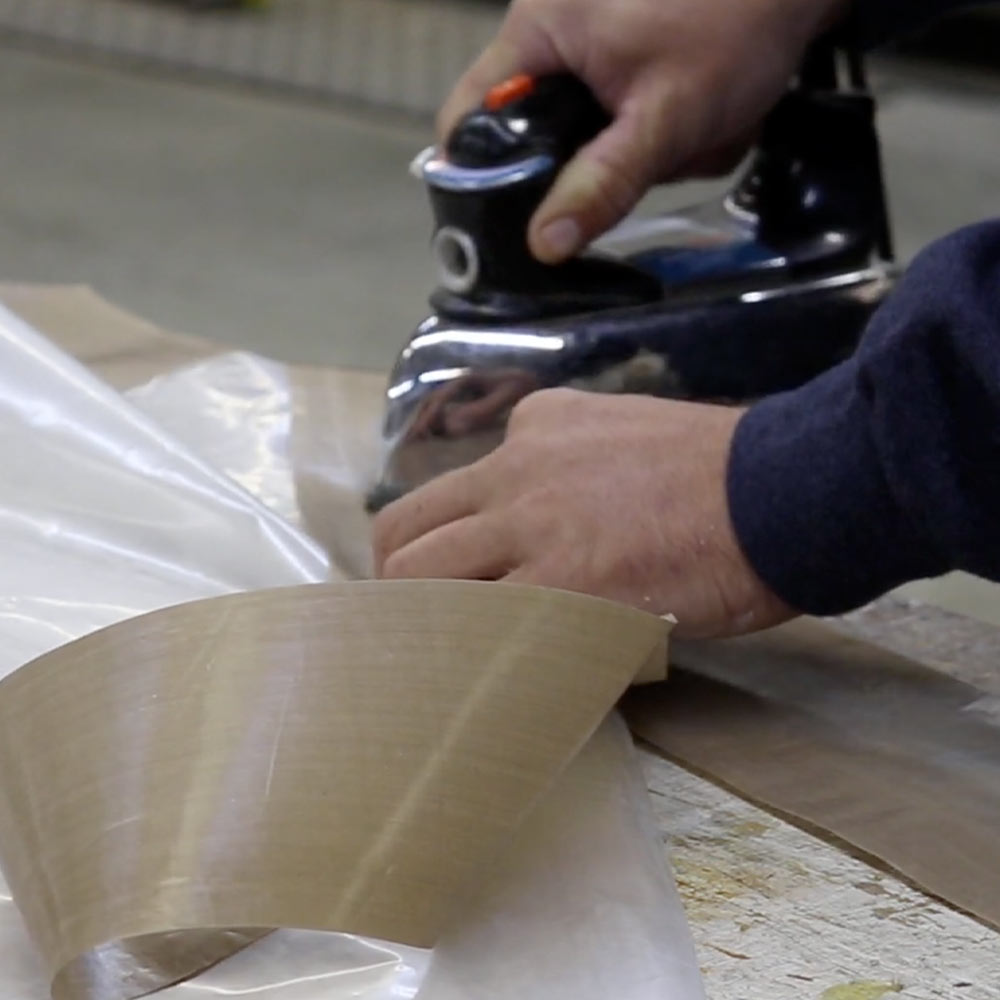
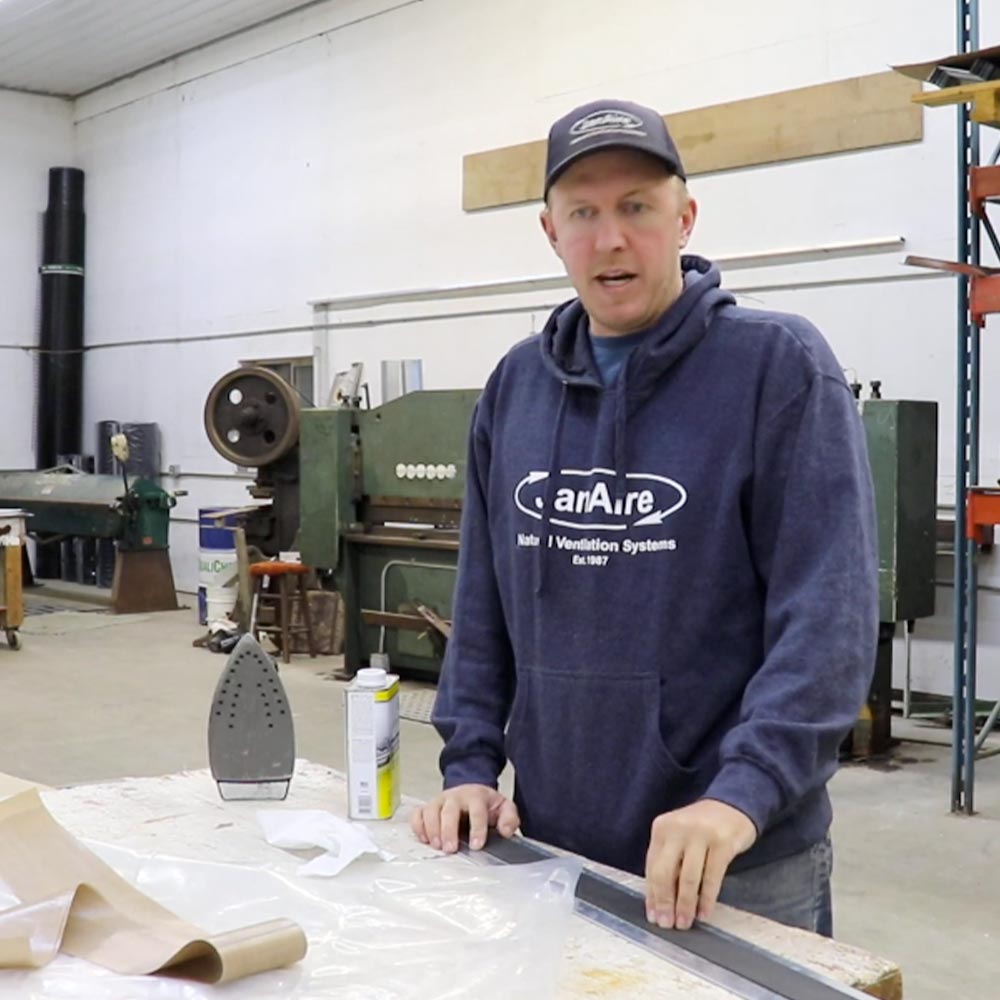
    Definitely! A roll of 4" X 8' Polypatch is supplied free with every new JanAire unit. When using Polypatch, the poly has to be clean and dry. In cold weather, an ordinary hair dryer can help warm the poly and Polypatch so they stick better. In damp weather, 3M® Super 77 and 3M® Super spray adhesives also help.

    Warranty?
    JanAire PolyVents have a pro-rated warranty for up to 3 years from the shipping date that includes faulty workmanship or deterioration due to the action of ultraviolet rays.
    As needed, your poly will be replaced according to the following schedule:
    From date of shipping:
    Up to 12 months...100% of cost of replacement poly
    From 13 months to 24 months...50% of cost of replacement poly
    From 25 months to 36 months...20% of cost of replacement poly

    How long do PolyVents last?
    The metal frame that houses the unit should last as long as your barn lasts. The poly will have a four to nine year life depending on conditions.

    Installation time?
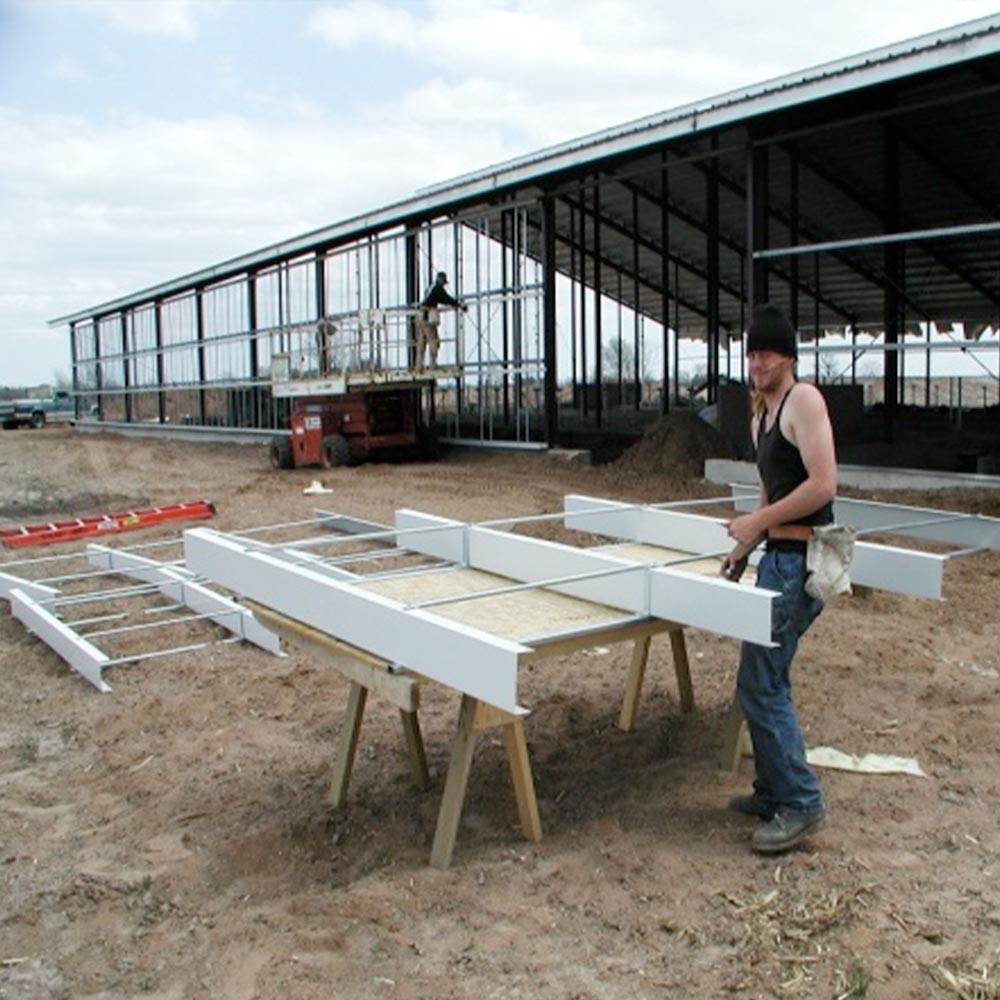
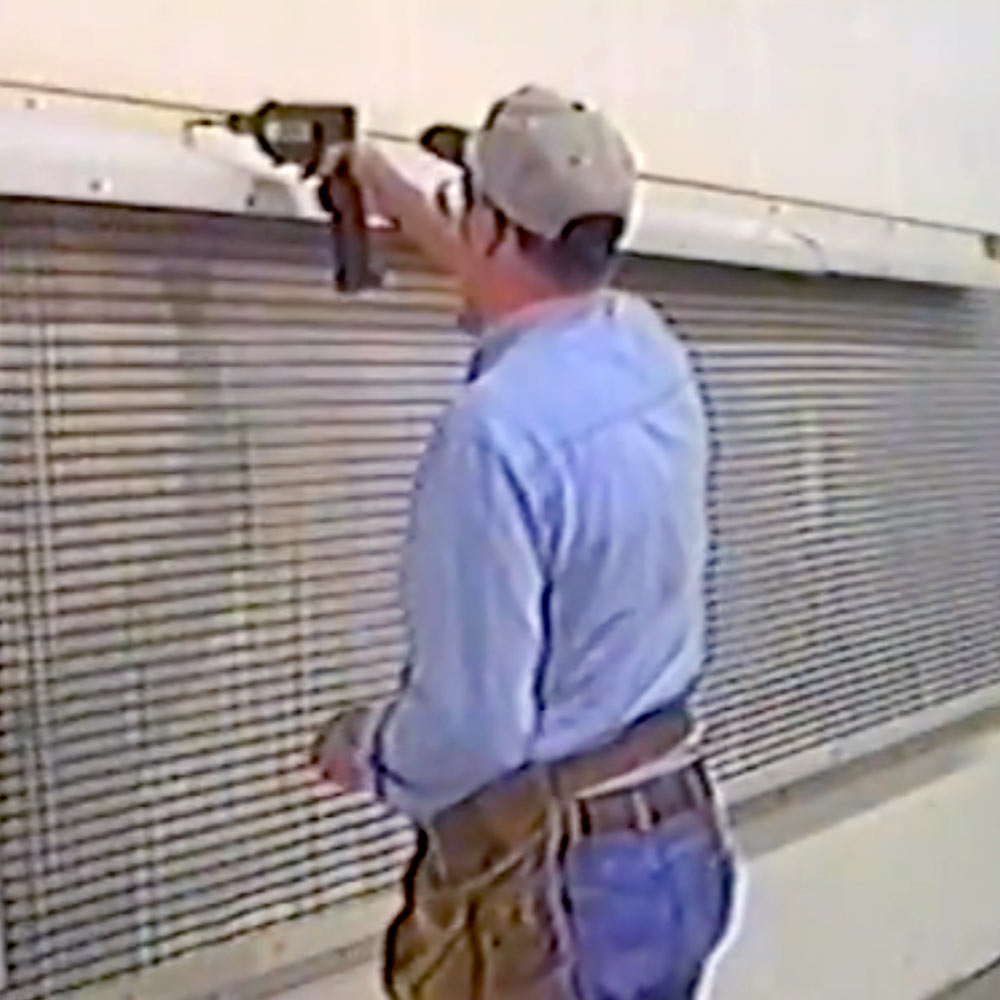
    Starting with a framed opening, with birdbarrier in place, competent installers tell they can install a JanAire PolyVent in half the time that would be needed to install a conventional curtain. It is hard to be more specific due to all the variables involved. Example: Two people working at ground level have installed a 3' X 168' unit, from start to finish in 3 hours. The next day, those same two people working with stepladders, installed a 4' X 120' unit in 4 hours!! Working conditions make a big difference!

    Time needed to replace poly?
    Two people can replace poly in a JanAire unit, under 100 feet in length, is as little as 20 minutes. Three people could replace a 150-foot length of poly in about 30 minutes.

    Will JanAire PolyVents stand up to the strong winds we have here?
    You will not hear or see ANY annoying curtain flopping with a JanAire PolyVent! Because of its design, regardless of whether it is closed or partially open, the air pressure within the tubes keep it from moving back and forth in its frame. We have installation in some western states that have been hit with straight-line winds where the roofs were torn off the barns but the PolyVents were just fine!

    What happens in a power outage?
    If you lost power, the PolyVent will entirely fail in an open position, which is what you want, so your livestock won't suffocate! In cold weather, you can limit how much air enters the building by installing our Tether Kit to the PolyVent. Our experience shows there is a bigger risk with having a multi stage control malfunction that does NOT OPEN a curtain when it fails, i.e. suffocating livestock. An easy fix for this potential problem would be to install a single stage thermostat between the master control and the PolyVent blower. Then, set the temperature on the thermostat slightly higher then what you desire it to be.

    Mice?
    Obviously, no one wants rodents in any curtain system! We actually feel that we have less exposure to rodents than you would have with a conventional curtain. Why? A mouse can hide anywhere in the length of a conventional curtain and start building a nest. BUT, with a PolyVent, being clear, and folding down the way it does, 99% of the time, they won't be in the length of the PolyVent. So, where will they be? In the curtain pockets, because it is dark and protected. So, what's the answer? We have a number of producers who report having excellent results by taking the hose cover and the standard front panels off the unit in the spring and leaving them off until mid October. By leaving the whole system exposed, there is no place for the rodents to hide.

    Spacer Spacer
    Spacer Spacer Spacer Spacer Spacer
      Spacer © All Rights Reserved
    JanAire Ventilation Systems
    Spacer